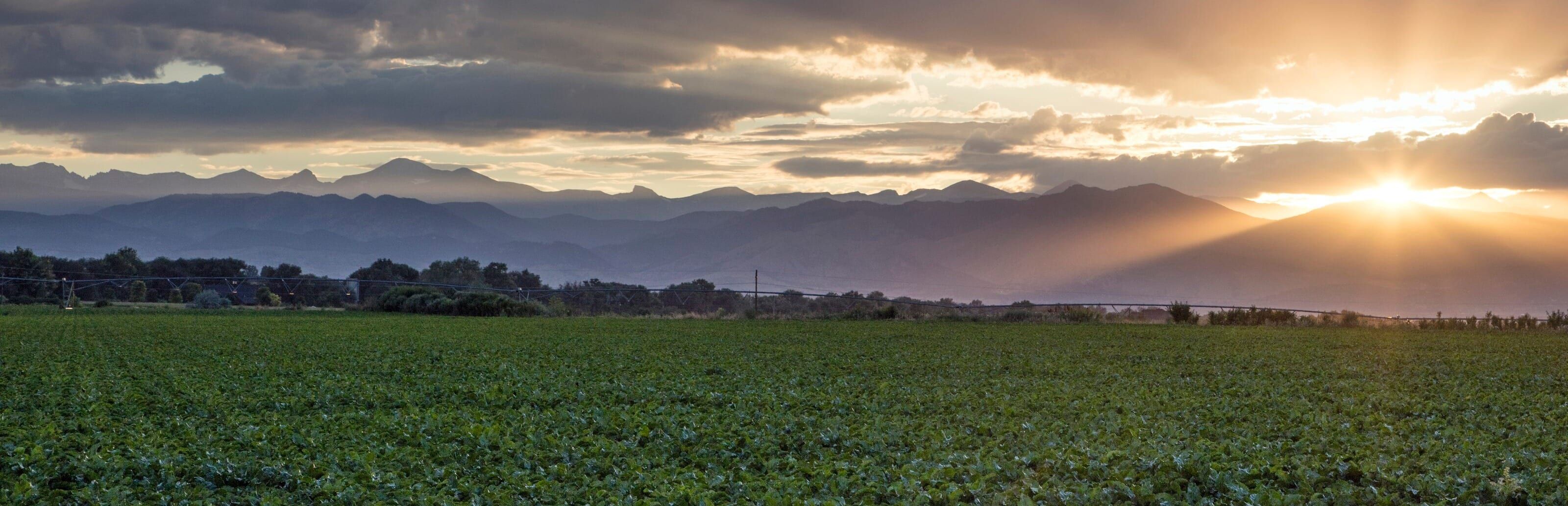
A green field at sunset with the sun low behind the Front Range, dark storm clouds above and rays of light fanning out across the sky

Clear flues and sound brick for Longmont homes of every age.

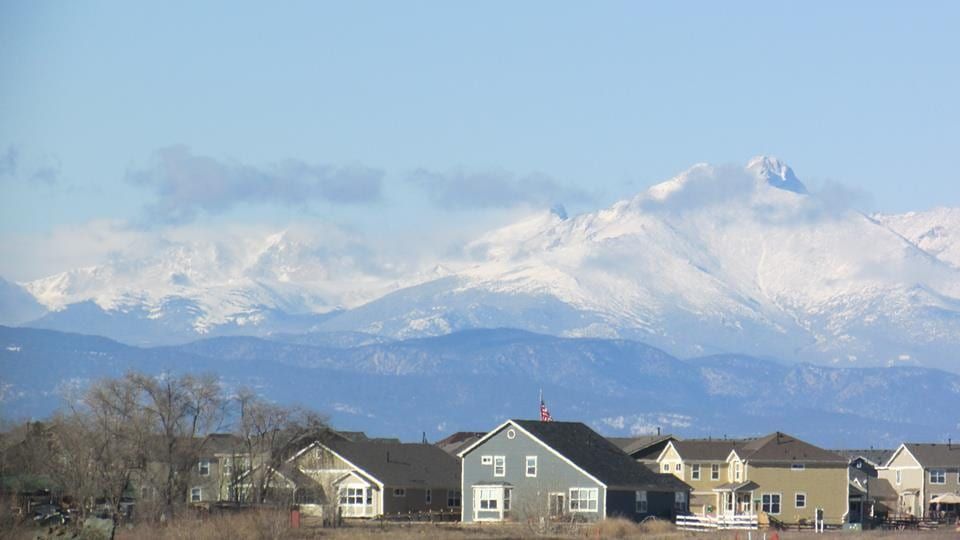
Sweeping, inspection and repair in Longmont, the St. Vrain Creek city with Longs Peak in view.

Photo: Carol M. Highsmith, Public domain

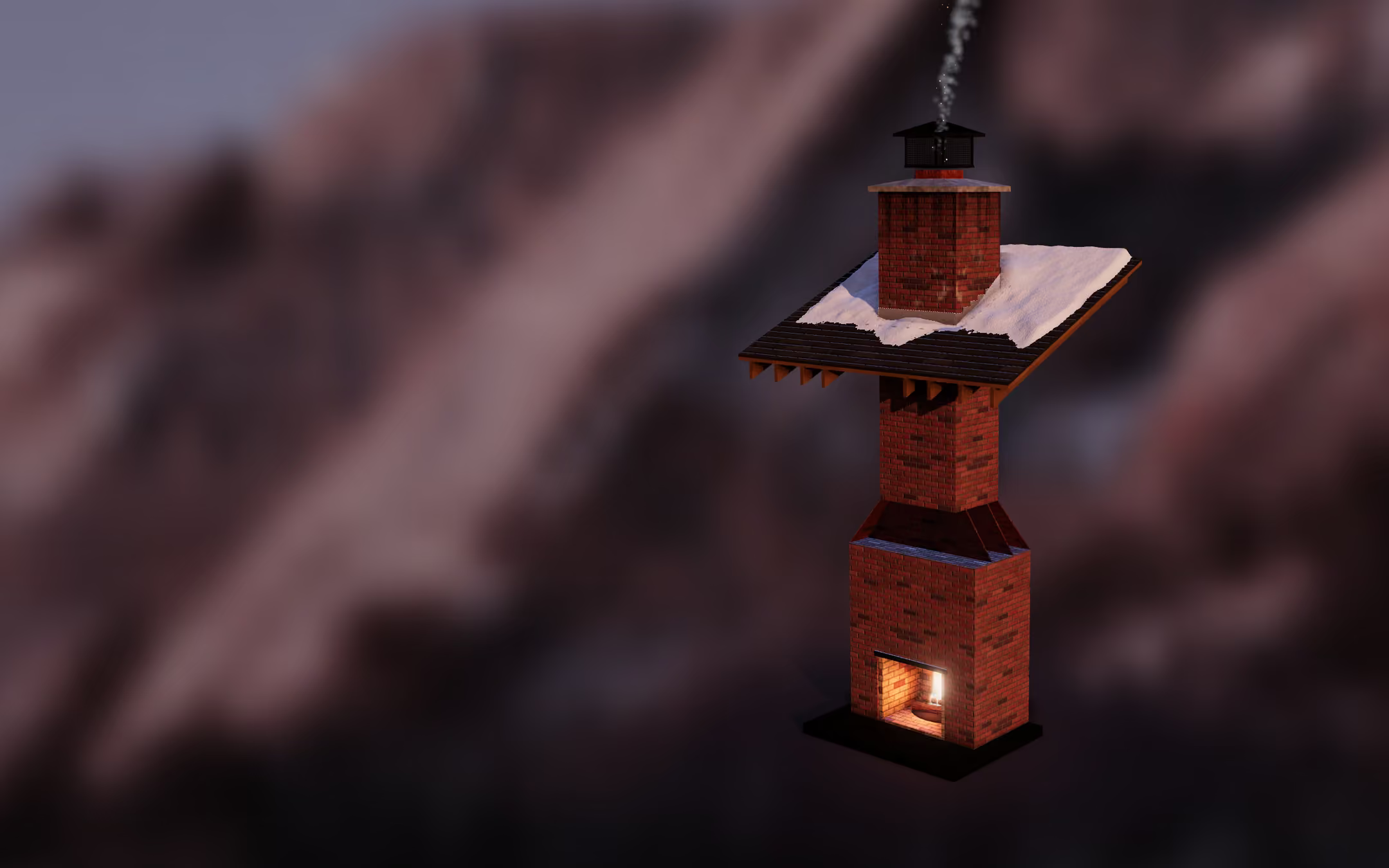
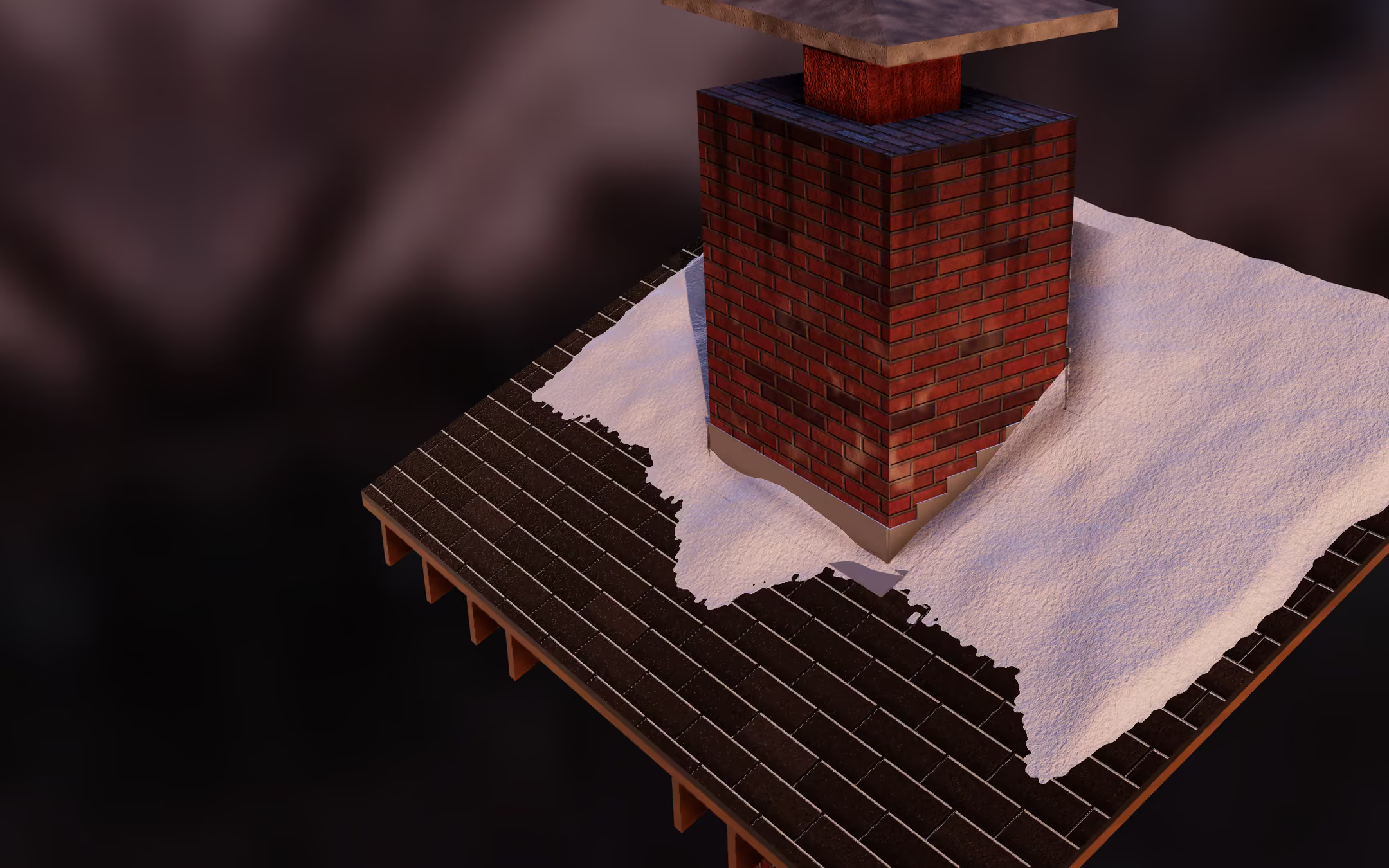
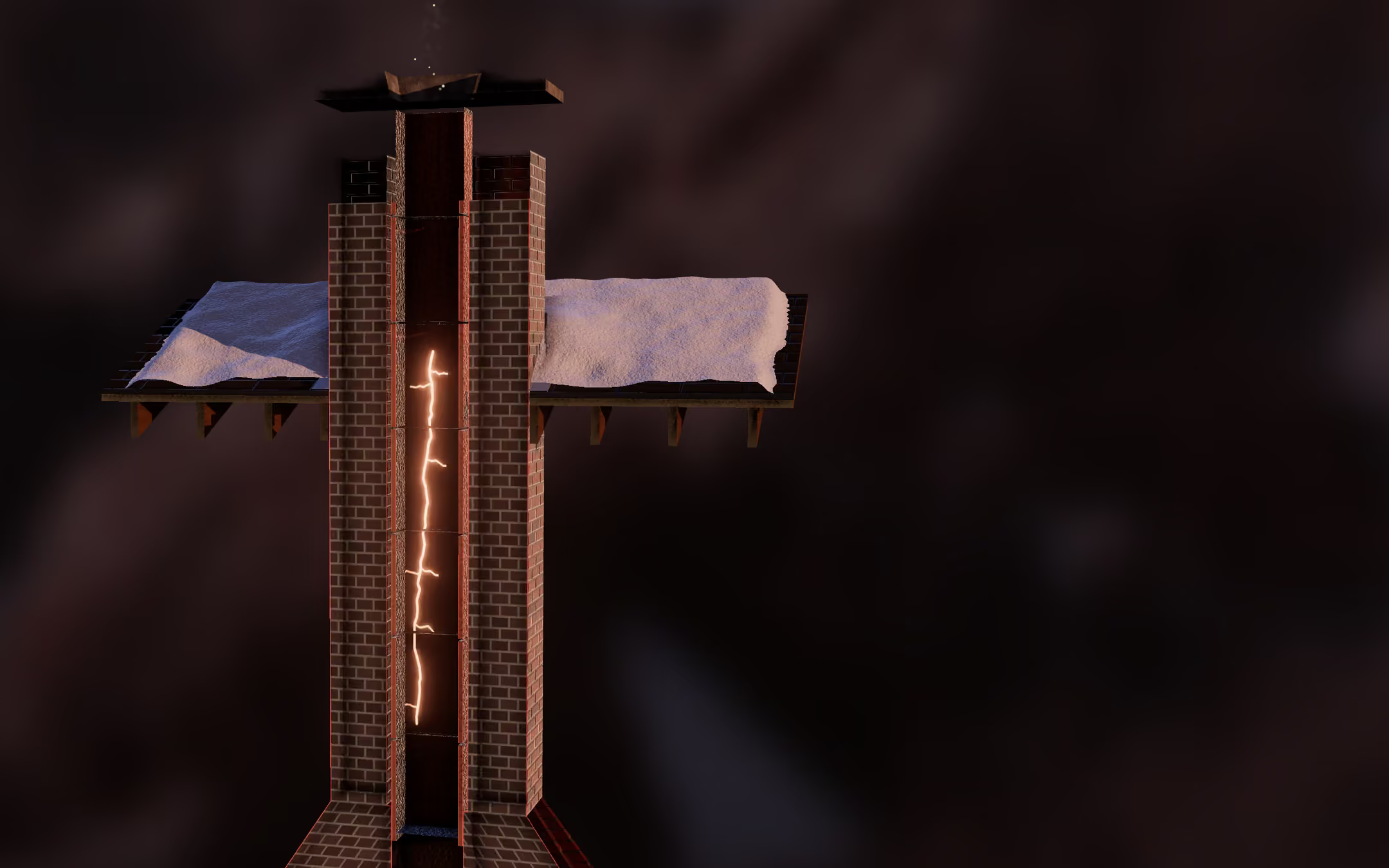
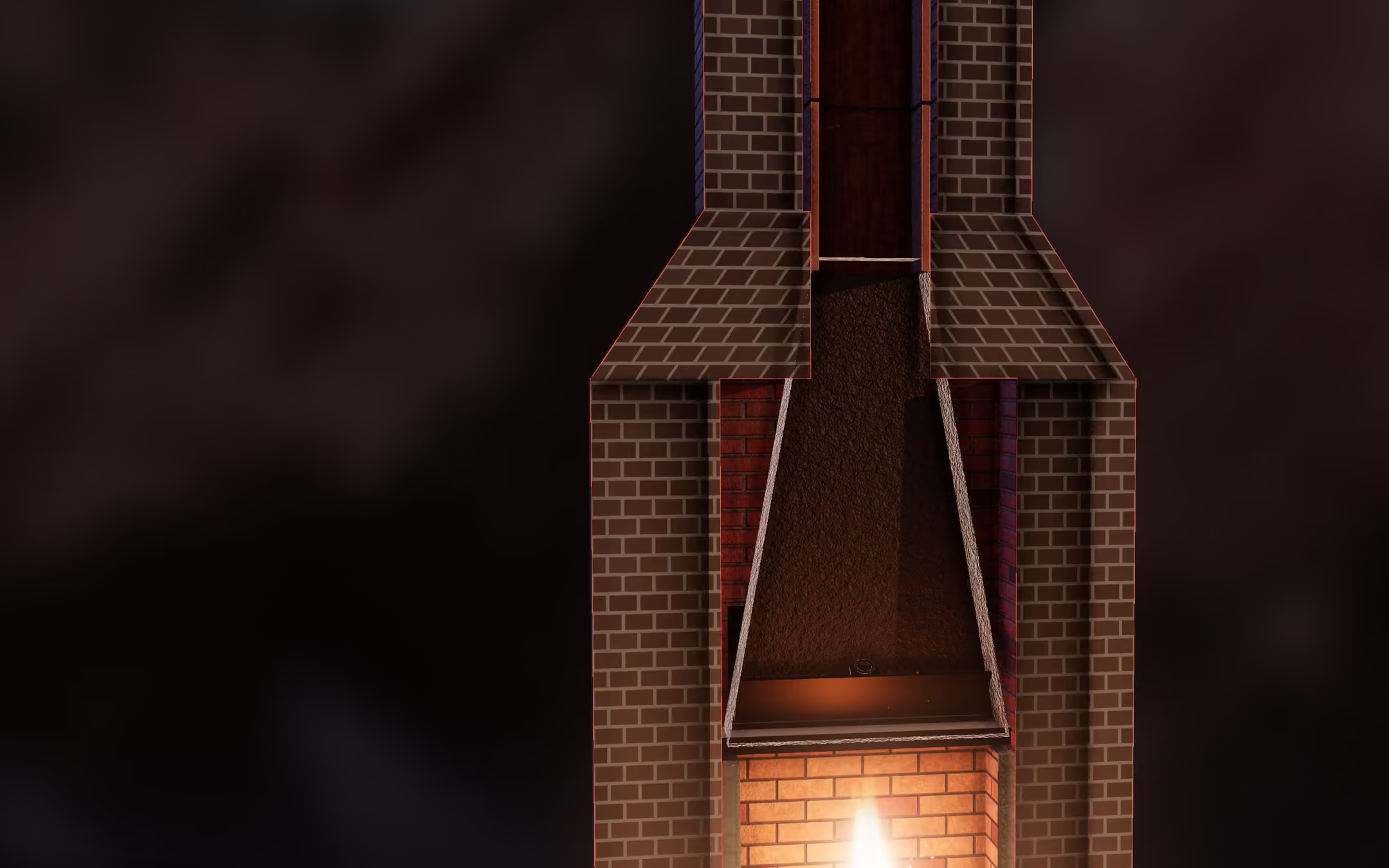
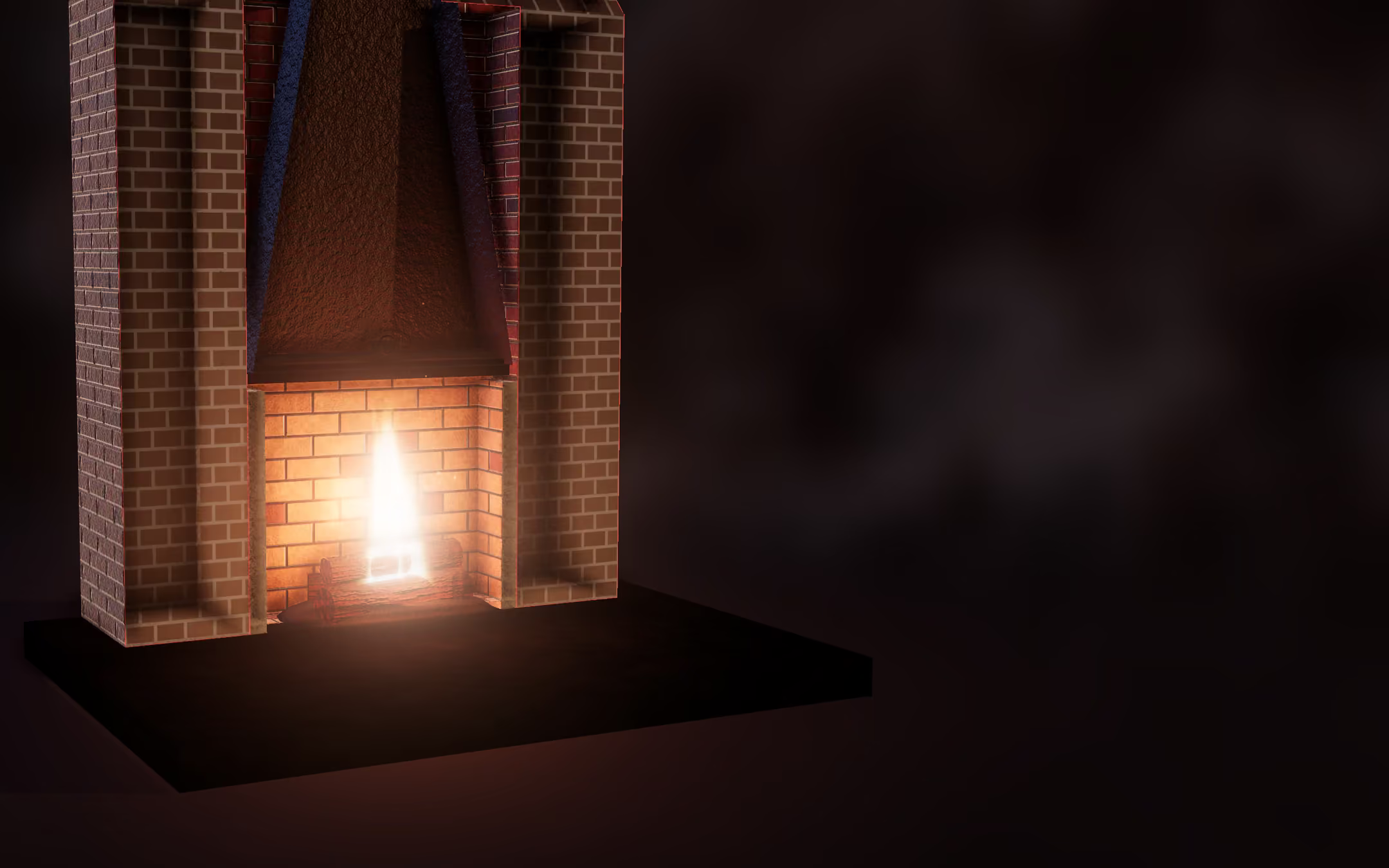
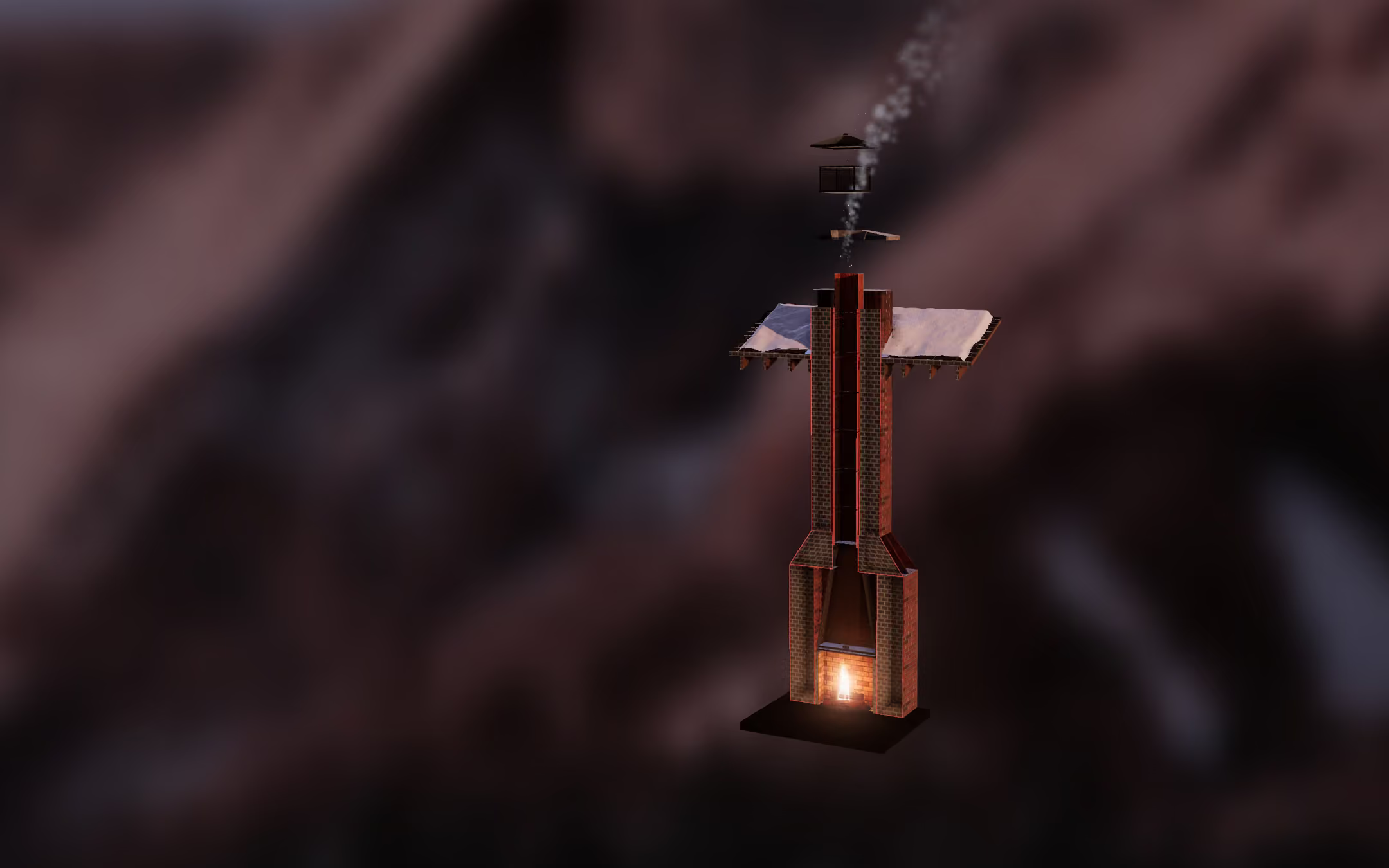
Six parts from cap to firebox, and what a Longmont winter asks of each.

Choose a part to see what we examine on it, and how freezing nights, heavy snow and dry air treat it on this side of the Front Range.

Start up on the roof
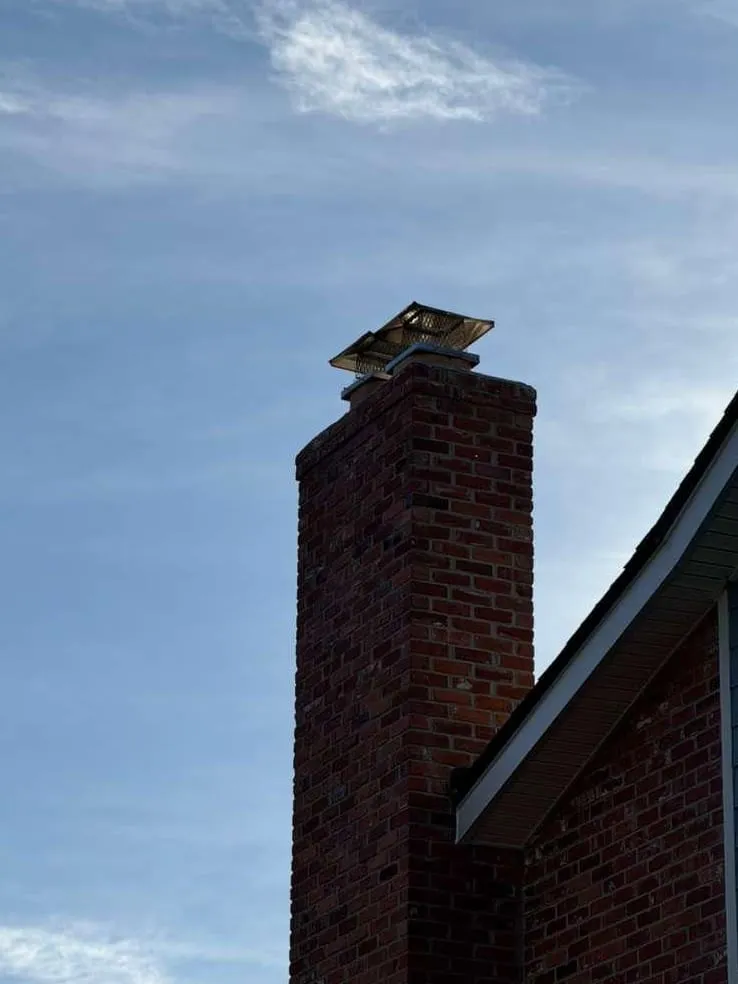
  1. A tall red brick chimney against a blue sky, topped with a shiny steel cap, beside the white eave of a house with blue siding
    From our Google Business Profile

    1At the very top

    Cap

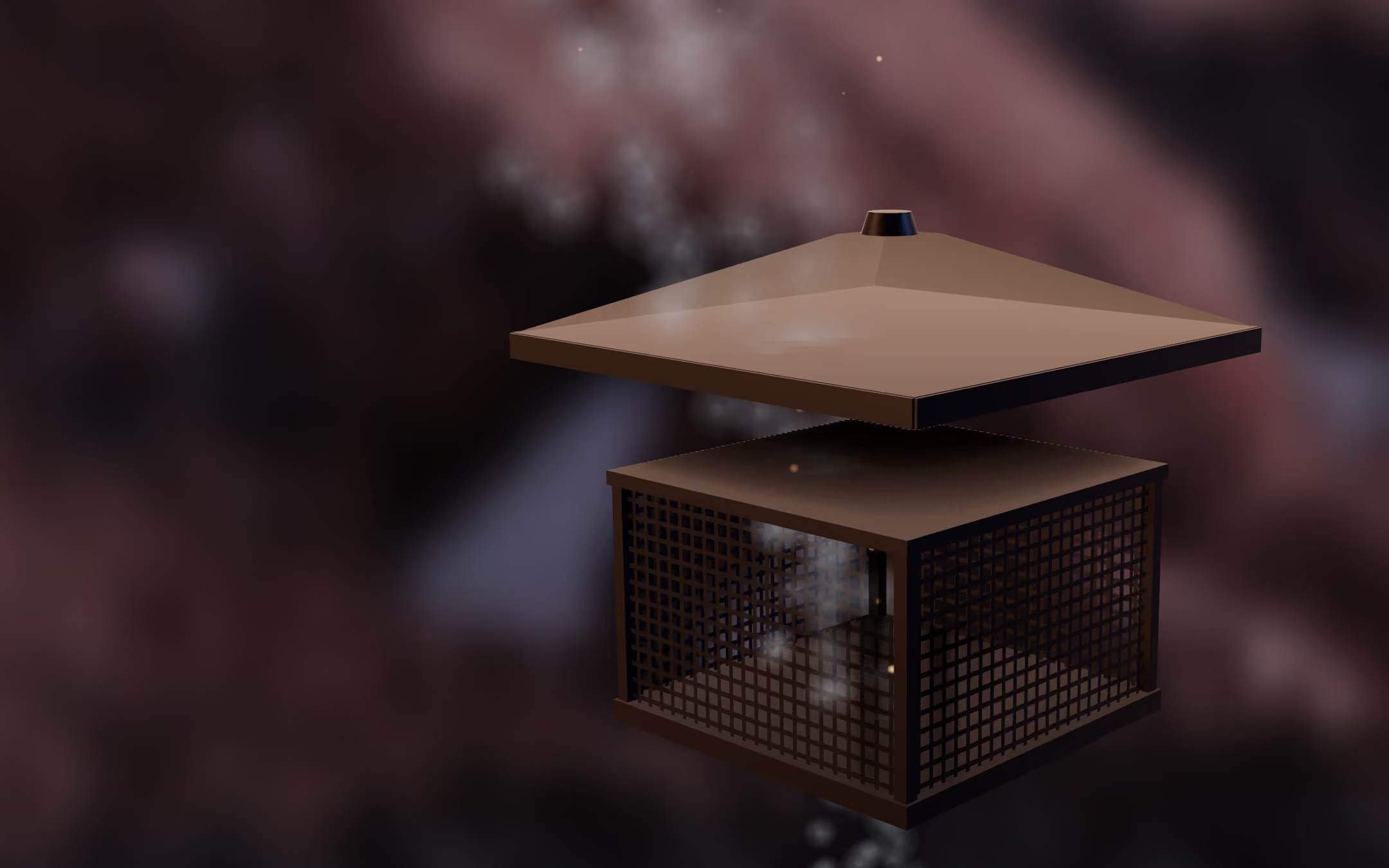
    Rain, snow and wandering sparrows all meet the cap first. Its mesh holds embers in and animals out, and the lid above it turns the weather aside.

    We check: a lid dented by hail, mesh coming loose, rust at the lid edges or the joins.

    Next: Crown
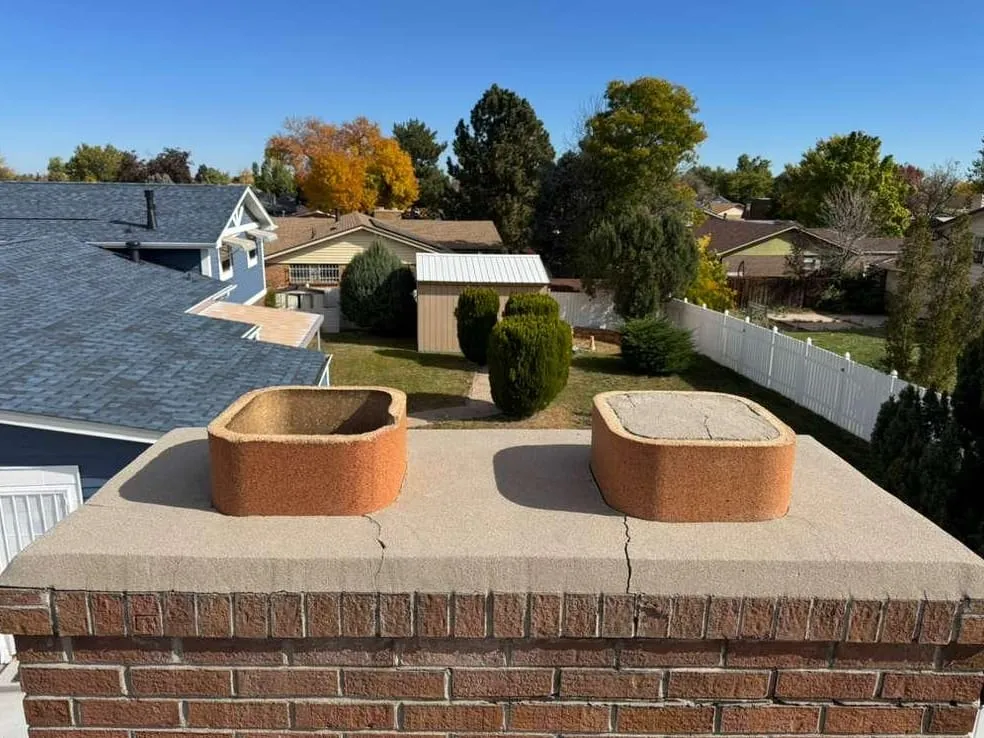
  2. Two clay flue tiles standing on a wide concrete crown with hairline cracks, on a red brick chimney, with a fenced yard, houses and trees behind
    From our Google Business Profile

    2Below the cap

    Crown

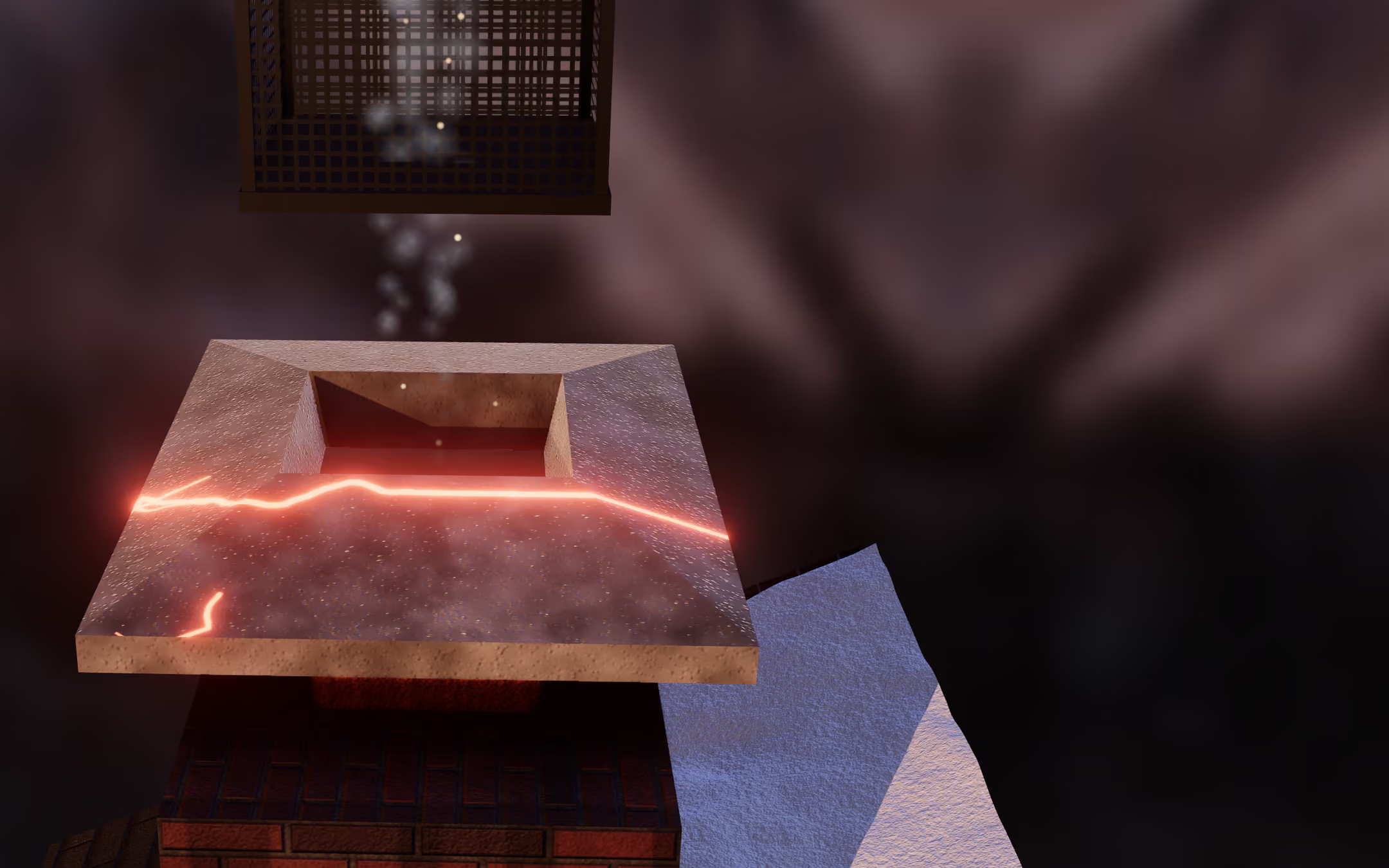
    Cracks start small here. A seam in the slab takes in thaw water in the afternoon and holds it until the freeze pushes the gap wider. In a normal Longmont January the low is 14.4°F and the high 44.5°F, so that cycle gets plenty of chances.

    We check: fine cracks, crumbling edges, a gap at the slab's rim beside the flue.

    Next: Flashing
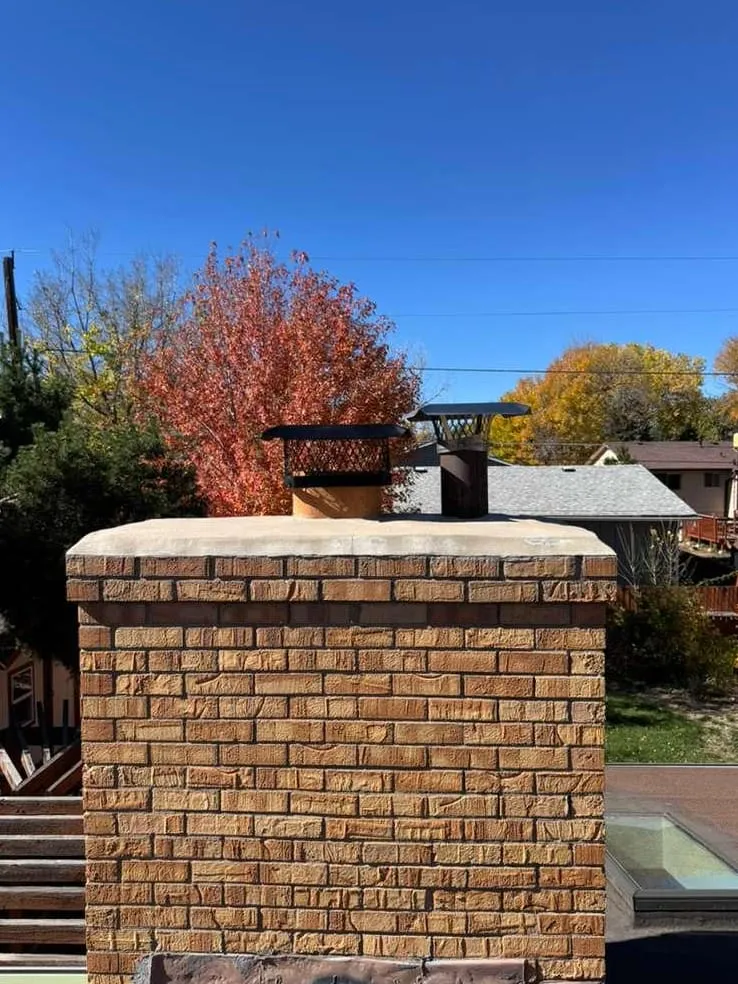
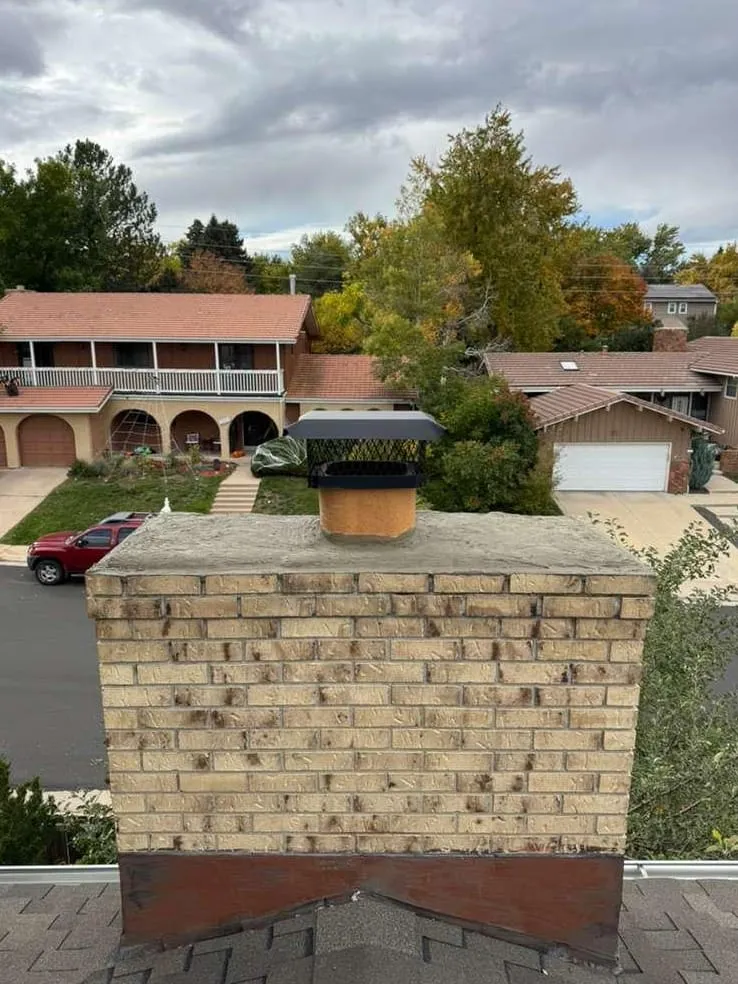
  3. A pale yellow brick chimney with a flat concrete top and a black cap, a dark brown metal band at its base on the roof, above a street of houses and autumn trees
    From our Google Business Profile

    3Around the base

    Flashing

    Where the stack comes up through the roof, a metal collar and a bead of sealant keep the weather out. Snow piles on the uphill side and drains slowly, so any edge that has curled up lets the water run in behind the brick.

    We check: a curled or lifted edge, sealant that has hardened and split, rust trails, a damp stain on a ceiling near the stack.

    Next: Flue liner
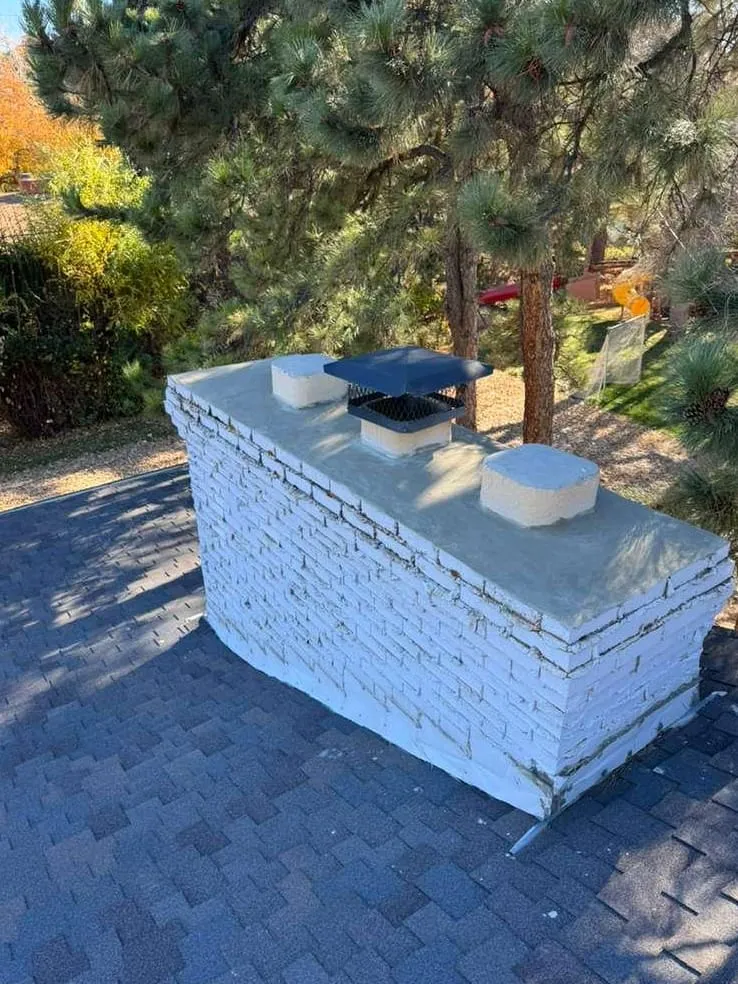
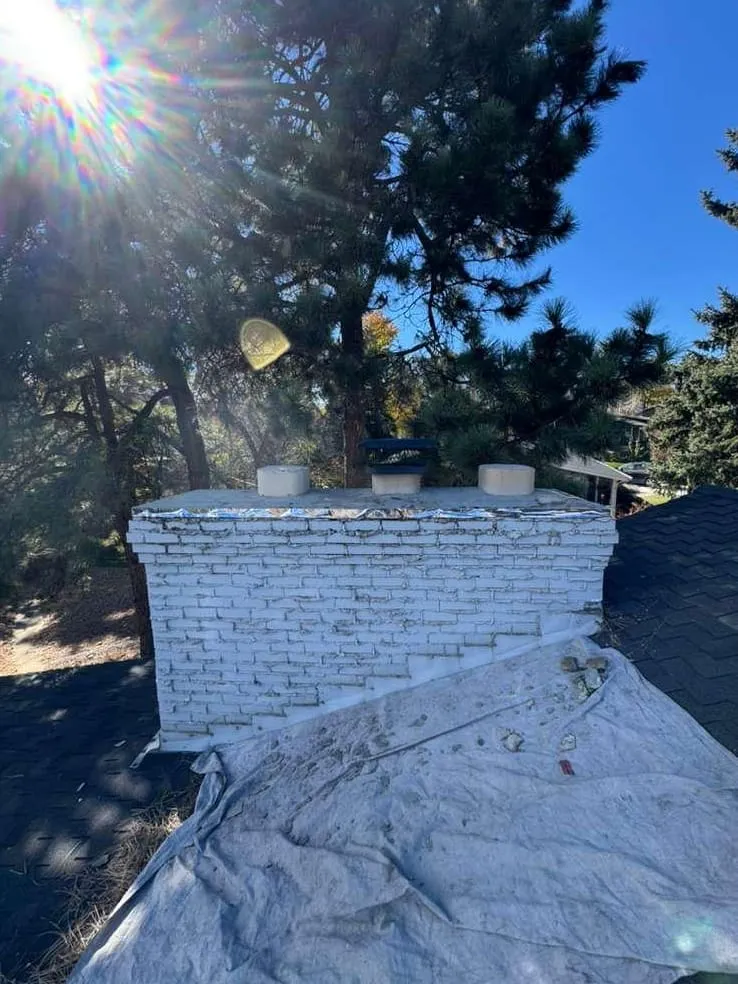
  4. A chimney of white-painted brick with two round clay flue tops and a flat blue cap on a concrete crown, with pine trees behind and a gray shingle roof around it
    From our Google Business Profile

    4Within the brick

    Flue liner

    Smoke and gas travel up the liner, hidden inside the brick. Longmont's median house dates from 1991, which puts a typical flue past thirty years: time enough for a tile to slip or a pipe seam to rust, and neither can be seen from where you sit.

    We check: pipe seams that have rusted or opened, tiles that are cracked or out of line, a liner that is wrong for the appliance it serves.

    Next: Smoke chamber
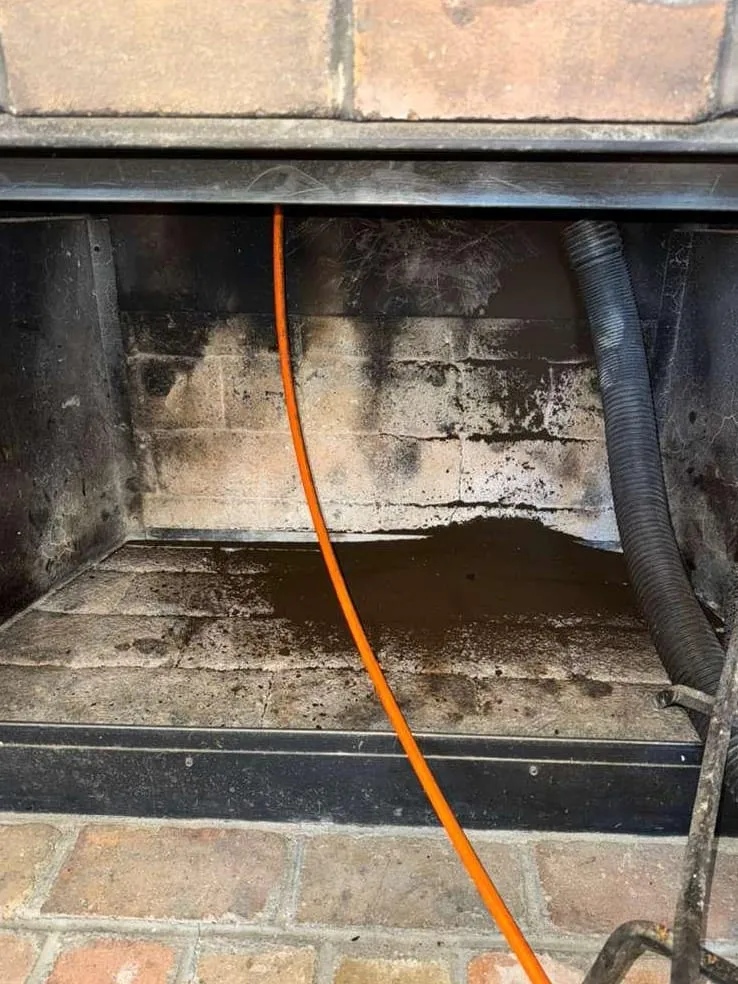
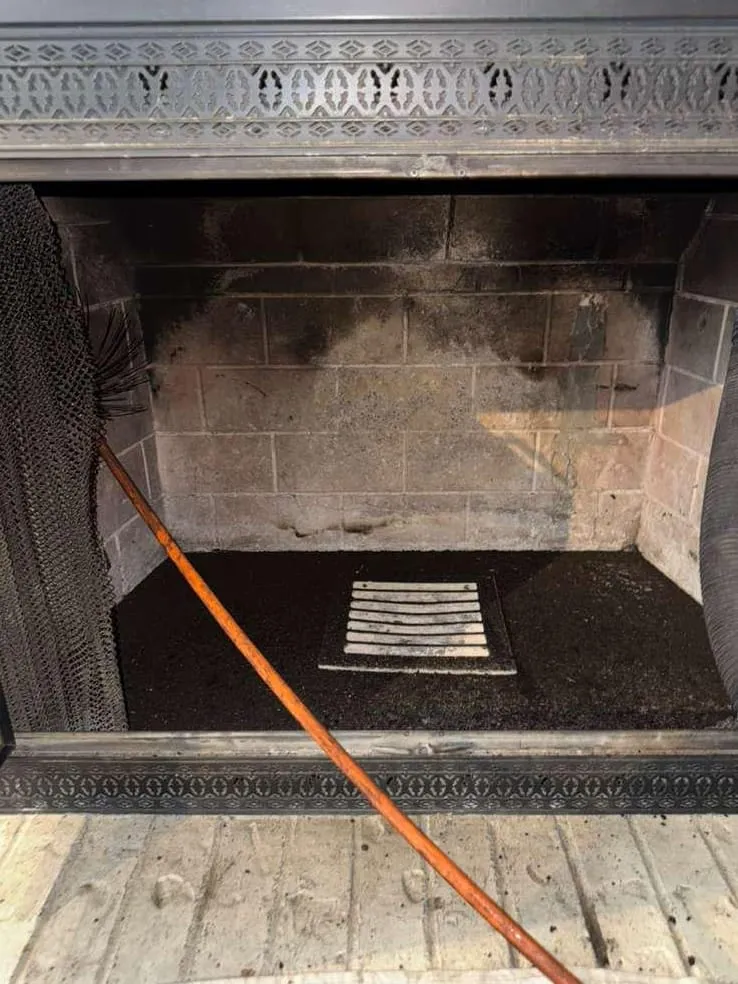
  5. A brick firebox with soot on its walls, an orange cable hanging down the middle and a ribbed vacuum hose on the right
    From our Google Business Profile

    5Between flue and firebox

    Smoke chamber and damper

    The smoke shelf over the damper catches the first soot and creosote. A fireplace used a few evenings a month collects slowly while a daily stove collects fast, yet both collect, and a damper stuck partly open lets heated air escape all winter.

    We check: tar-like or glossy deposits, a damper that closes all the way, a shelf that crumbles or slopes.

    Next: Firebox
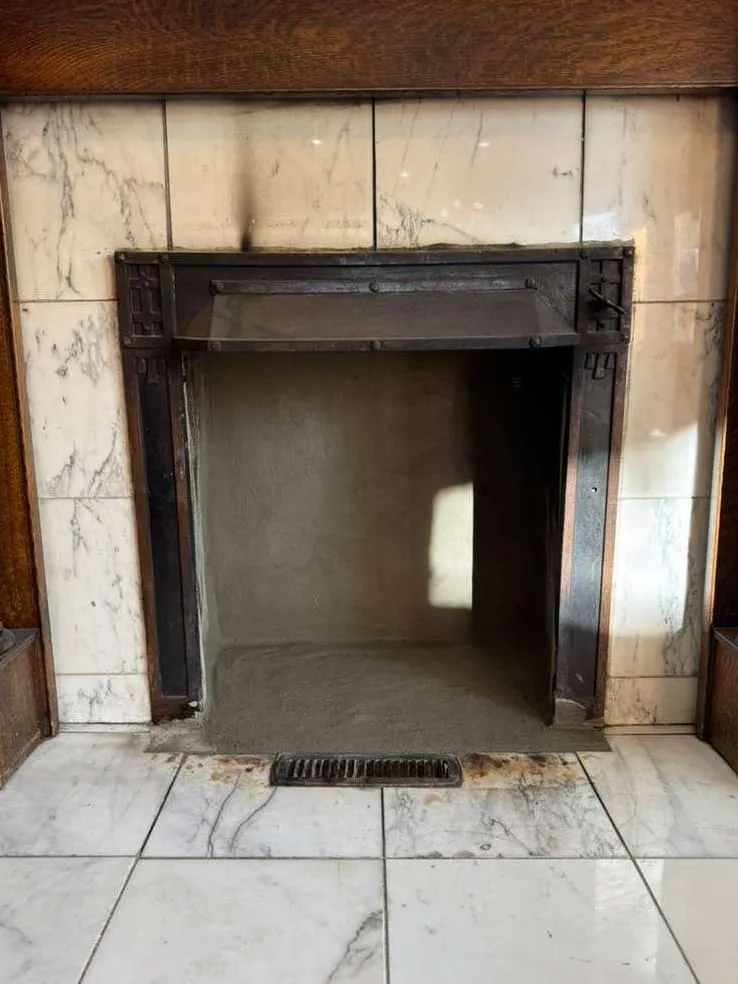
  6. A white marble fireplace with a dark iron frame, an oak mantel above, a clean empty firebox and a small floor vent in the hearth
    From our Google Business Profile

    6At the hearth

    Firebox

    The fire sits right against the firebox walls. Over the years, heating and cooling crack the firebrick and loosen the joints between the bricks, and a narrow gap is easy to fill before the heat finds the framing behind it.

    We check: joints with open mortar, firebrick that is cracked or flaking, a hearth that is level and solid.

    See all six

What we take care of, from the roof to the fireplace.

  1. A brick firebox with soot on its walls, an orange cable hanging down the middle and a ribbed vacuum hose on the right
    From our Google Business Profile

    Brushes loosen the sooty coat inside the flue and on the smoke shelf, and the firebox is cleared out afterward. A flue kept clean pulls better and gives a spark less to catch on.

    • The flue, damper to cap
    • Smoke shelf and firebox
    • Findings, explained plainly
    More on sweeping
    Set up a sweep
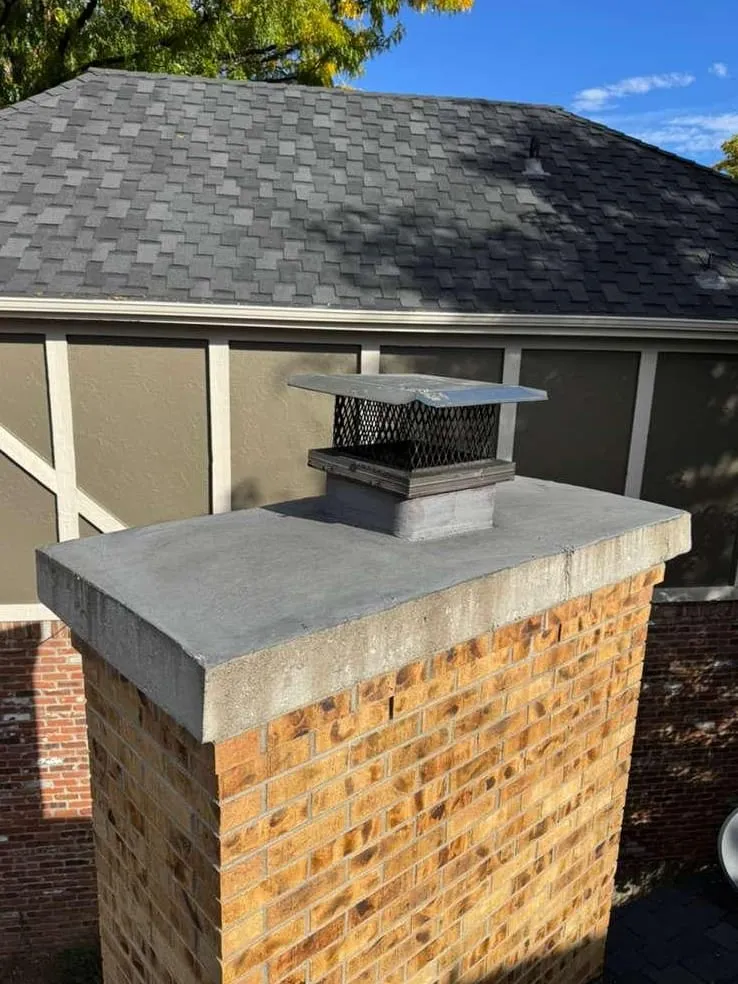
  2. A tan brick chimney with a gray concrete crown and a black mesh cap, beside a house with a dark shingle roof
    From our Google Business Profile

    Every part from the cap to the firebox gets a careful look: once a year, after a chimney fire or a storm, and once more when a home changes hands, a case NFPA 211 ties to a Level 2.

    • Cap, crown and flashing
    • The flue along its full length
    • Each fault named in plain words
    More on inspections
    Plan an inspection visit
  3. A chimney of white-painted brick with a shiny coated top and a gray tarp spread over the roof below it, with pine trees and sunlit shingles around
    From our Google Business Profile

    We mend crowns, caps, flashing, mortar and firebrick. A small fault dealt with in the fall stays a smaller job than the same fault after a winter of freezing nights.

    • Crowns, sealed or rebuilt
    • Caps and spark screens
    • Flashing and tuckpointing
    More on repairs
    Discuss a repair
  4. The inside of a firebox under a decorative metal frame, with sooty brick above, a cleared hearth floor with an ash grate and an orange cable lying across it
    From our Google Business Profile

    Meant for fireplaces and stoves used only occasionally: ash and soot cleared from the firebox and the shelf, the stove pipe brushed, and the damper moved through its whole travel.

    • The firebox and its shelf
    • Stove, insert and stovepipe
    • Damper opened and closed
    Stoves and fireplaces
    Set up a cleaning

Longmont weather meets the chimney.

Three things the sky brings to the Front Range, and why small faults are best fixed early.

  1. 01 / 03

    30°F. Below freezing at dawn, above it by noon

    The 1991 to 2020 normal for January in Longmont is a low of 14.4°F and a high of 44.5°F, a spread of about 30 degrees. The low falls to 32°F or under on 30.6 January days in an average year, and on 177.7 days across all twelve months, so a crack in the crown fills with melt water in the afternoon and can be frozen again by morning.

    Source: NOAA U.S. Climate Normals 1991 to 2020, station Longmont 2 ESE

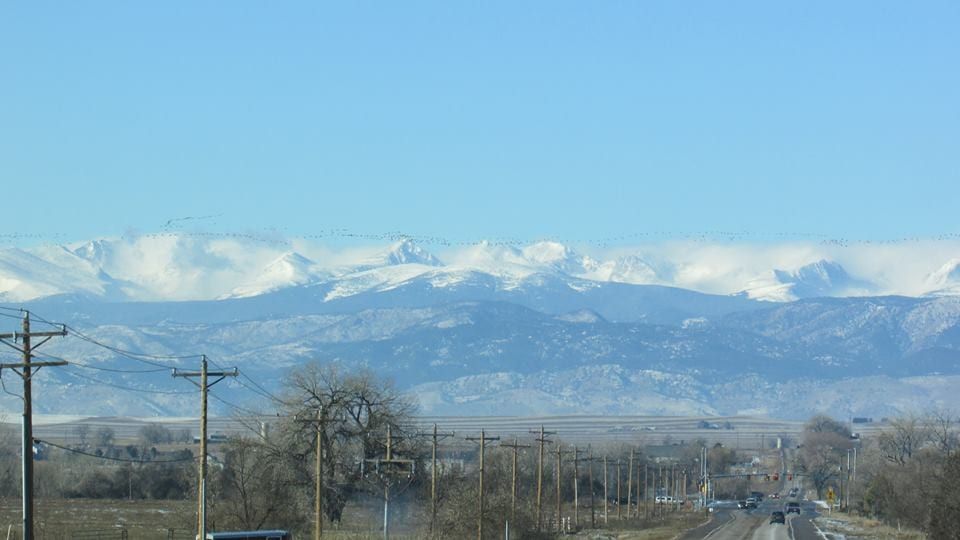
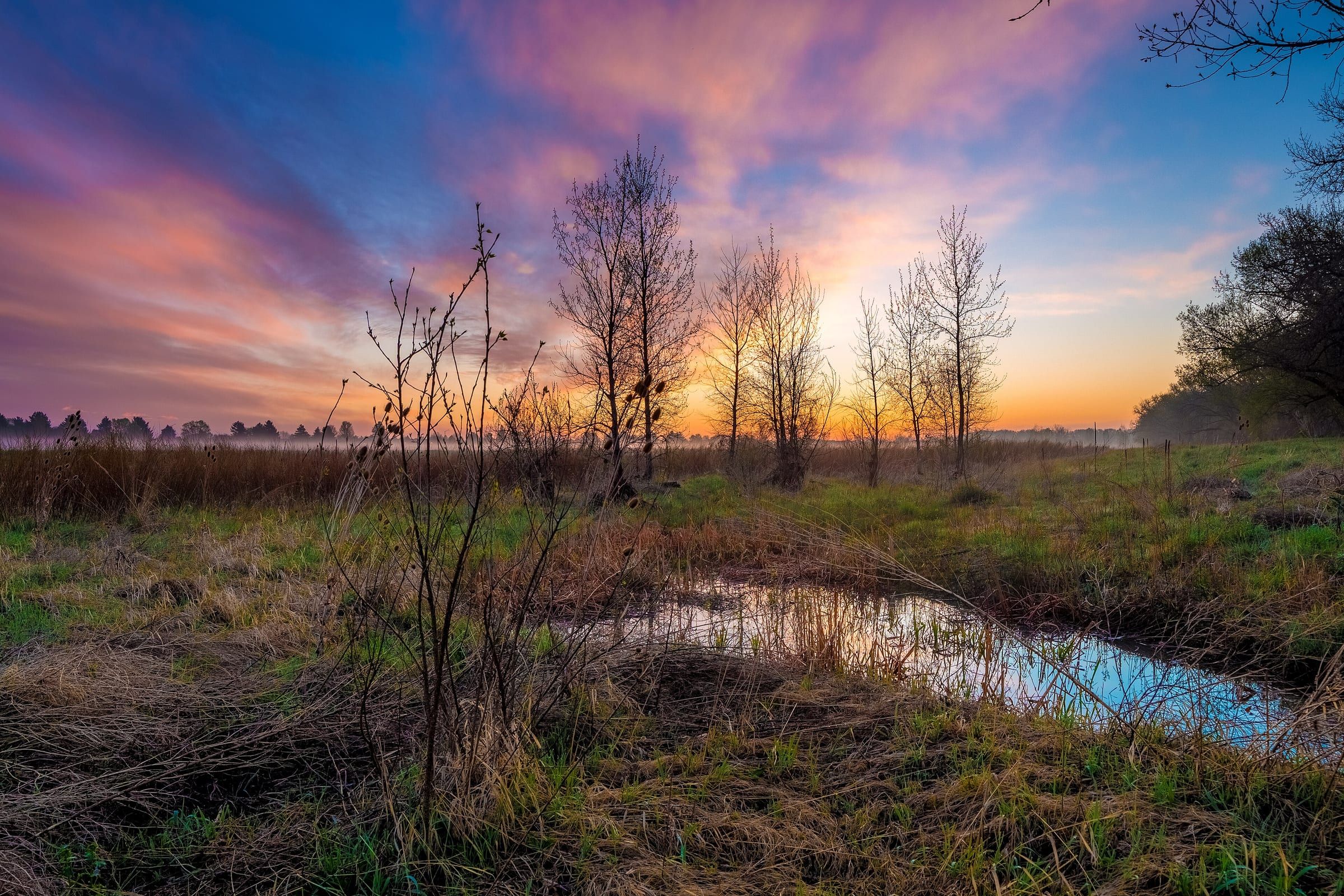
    Photo: USFWS Mountain-Prairie, Public domain

    Photo: USFWS Mountain-Prairie, Public domain

  2. 02 / 03

    25.5 in. Snow that arrives sideways

    In the storm of March 13 to 14, 2021, NWS Boulder logged 25.5 inches of snow 3 miles north-northeast of Longmont and 24.9 inches 2 miles northeast of town. Snow fell at 2 to 3 inches an hour, strong upslope winds brought blizzard conditions along the Front Range, and gusts of 40 to 50 mph were common along the I-25 corridor. Wind and drifts reach the high points of a roof first, and on a chimney those are the cap and the crown.

    Source: NWS Boulder, March 13 to 14, 2021 blizzard summary and storm reports

    Photo: USFWS Mountain-Prairie, Public domain

    Photo: USFWS Mountain-Prairie, Public domain

  3. 03 / 03

    0.46 in. The driest month, and dry grass

    December is Longmont's driest month: its 1991 to 2020 normal is 0.46 inch, and January and February bring only 0.56 and 0.57. The whole year adds up to 15.21 inches. With so little moisture on the ground, a spark that escapes the flue can find dry grass or old shingles, which is why a cap with mesh openings of 1/2 inch at most matters, as the model residential code provides.

    Source: NOAA U.S. Climate Normals 1991 to 2020, station Longmont 2 ESE; IRC R1003.9.2

    Photo: Jeremy Thomas, CC0

    Photo: Jeremy Thomas, CC0

A closer look at chimneys.

Ten photos from our Google Business Profile.

Every tag jumps to that part in the walkthrough above.

Longmont, from McIntosh Lake to Union Reservoir.

We are based in Longmont, a city of the St. Vrain valley named for Longs Peak, which stands in plain view from town. It began in 1871 as the Chicago-Colorado Colony. The map traces today's outline and a few places inside it: in the northwest, west of the center, in the middle, in the south, in the northeast, out east, and in the southeast.

Not sure your street is in our area? Call (970) 610-0859 and we will say.

City of LongmontContour lines every 100 ft

Relief: AWS Terrain Tiles. City limits: Census Bureau TIGERweb. Place names and positions: OpenStreetMap contributors.

  • Longmont
  • Downtown Longmont
  • McIntosh Lake
  • Golden Ponds
  • Left Hand Creek Park
  • Jim Hamm Nature Area
  • Sandstone Ranch
  • Union Reservoir
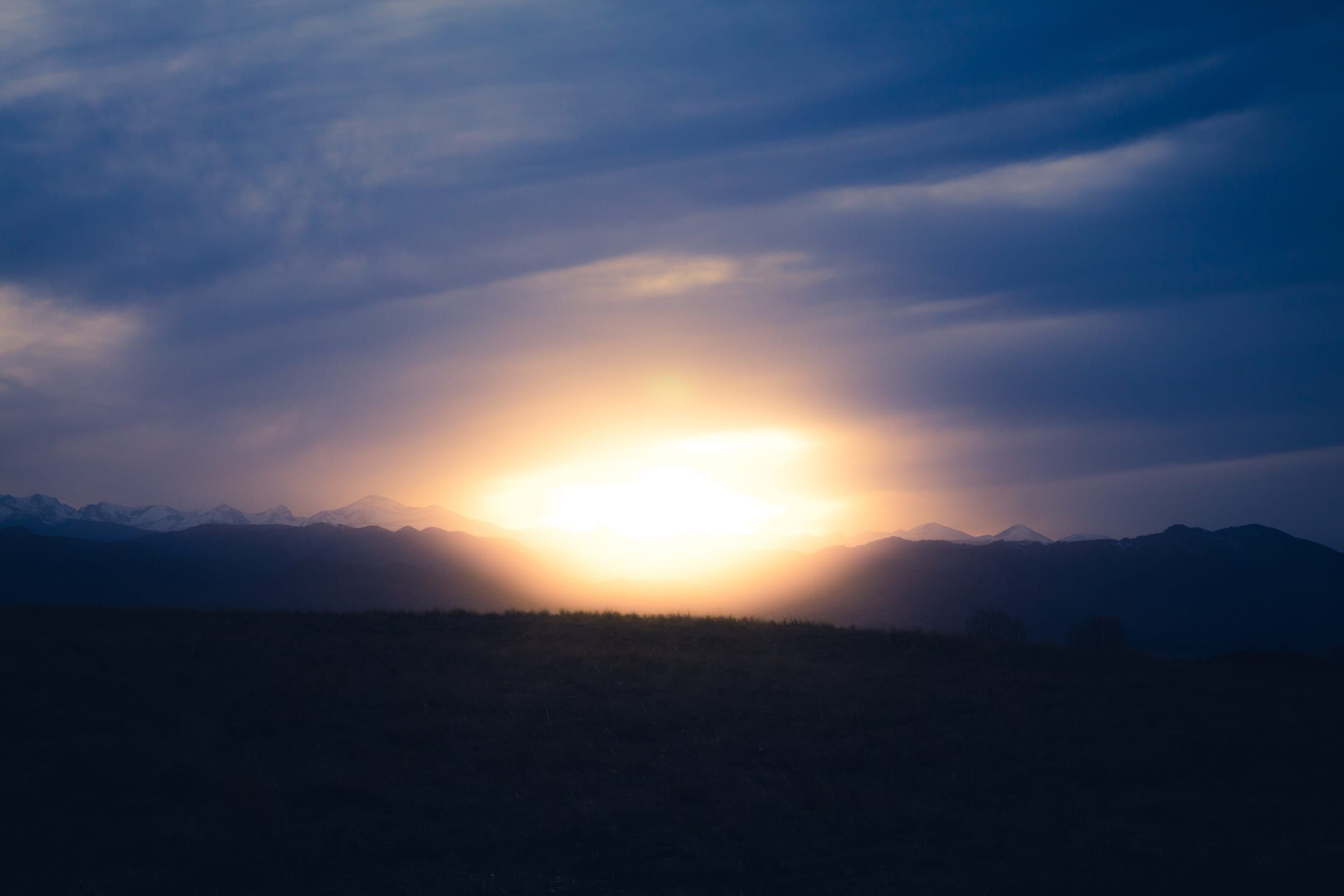
A low sun glowing through layered blue clouds over a dark plain, with a line of mountains, some of them snow-topped, along the horizon

Photo: Jeremy Thomas, CC0

Longmont homeowners ask.

Direct answers, with the source named wherever a figure comes from one.

How often does a chimney need sweeping?

Burning habits matter more than the date. NFPA 211 recommends a chimney inspection each year, and what that visit finds decides whether a sweep is due. In the Census Bureau's 2020 to 2024 estimates, 68 of Longmont's 42,155 occupied homes rely mainly on wood (margin of error 49) and roughly three in four on utility gas, so most fireplaces here serve an occasional cold evening.

Source: NFPA 211; Census Bureau ACS 5-year estimates, 2020 to 2024

Should a chimney be inspected when a home is bought or sold?

Yes, and NFPA 211 says why: a sale or transfer is one of the times for a Level 2, which goes beyond a Level 1 by adding the attic, the crawl space and a camera sent up the flue. Longmont's homes are a mix. The Census Bureau counts about 8,400 of 43,528 as built in the 1970s, the biggest decade, and about 37 percent before 1980, so chimneys on a single street can differ in age, material and wear.

Source: NFPA 211; Census Bureau ACS 5-year estimates, 2020 to 2024

Why does my fireplace smell when the weather turns damp or warm?

Odors cling to soot and creosote. When the air is muggy or warm the flue draws weakly, and sometimes the draft runs backward so the smell drifts indoors. Clearing the deposits removes its source; a damper that seals and a cap overhead contain what is left.

What is a chimney crown?

The crown is the slab that finishes the top of a masonry chimney, directing water off the brick and the flue. With a January low of 14.4°F and a high of 44.5°F as the Longmont norm, water that enters a crack can freeze overnight and widen it.

Source: NOAA U.S. Climate Normals 1991 to 2020, Longmont 2 ESE station

Does a chimney need a cap?

In almost every case, yes. The cap shuts out rain, snow, birds and animals, and its mesh keeps sparks in. The model code (IRC R1003.9.2) puts a 1/2 inch ceiling on the mesh openings. Which rules apply in Longmont depends on the codes the city has adopted, and the city can confirm them.

Source: IRC model code, section R1003.9.2

Which parts of town do you serve?

We are based in Longmont. If you cannot tell whether your address is covered, be it near McIntosh Lake, out toward Union Reservoir or somewhere else in town, phone (970) 610-0859 and we will let you know.

How can I book?

Phone (970) 610-0859 (Monday through Sunday, 7 AM to 9 PM). The form below takes requests round the clock, and someone phones you back to agree on a time.

Book your visit.

Tell us what looks wrong on the form, or simply phone, and we will ring you back to settle on a day.

  1. 1Get in touch Ring the office or send a few lines through the form.
  2. 2We phone you A person calls back and picks a day with you.
  3. 3Roof to hearth The visit starts at the cap and finishes at the firebox, one part after another.
  4. 4You decide We tell you what we saw, and what happens next is up to you.

Phone

Monday through Sunday, 7 AM to 9 PM

(970) 610-0859

Online

At any hour, by form

Photo: Longmont star trails, Jeremy Thomas, CC0

What do you need?

What do you need?

About your chimney

What do you burn?

How do we reach you?

Best time to call

Back

Would you like the fireplace ready before the first cold night, or answers about something you noticed on the roof?

The phone line is answered Monday through Sunday, 7 AM to 9 PM. The form stays open day and night.

Book online